
My Blog Post
How to Take Creatine: 9 Essential Tips for Amazing Results
Nov
Learning how to take creatine correctly can help you make informed decisions about one of the most extensively researched sports nutrition supplements. Whether you are new to the gym, interested in improving strength, or comparing creatine gummies with powder, understanding the correct serving amount and daily routine is important.
Creatine is a naturally occurring compound found in muscles and obtained through certain foods, including meat and fish. The body also produces creatine from amino acids.
As a supplement, creatine monohydrate has been studied extensively for its effects on repeated high-intensity exercise, strength, and resistance-training performance.
However, questions remain common. Should you take creatine before or after a workout? Is loading necessary? Can you mix it with water? And should you continue taking it on rest days?
In this comprehensive guide from Supreme CBD Store UK, we explain how creatine works, practical ways to use it, the differences between powder and gummies, potential side effects, and common mistakes to avoid.
What Is Creatine and How Does It Work?
Creatine is a naturally occurring substance stored mainly in skeletal muscle.
Inside the body, some creatine is converted into phosphocreatine.
Phosphocreatine helps regenerate adenosine triphosphate (ATP), which provides energy for muscle contractions and other cellular activities.
During short, intense efforts such as sprinting or lifting weights, ATP is used rapidly.
The phosphocreatine system helps restore ATP so muscles can continue producing energy during repeated high-intensity activity.
Why Do People Take Creatine?
Creatine supplements are commonly used by people participating in:
-
Weight training
-
Bodybuilding
-
Sprinting
-
Powerlifting
-
High-intensity interval training
-
Team sports involving repeated sprints
-
Other activities requiring short bursts of muscular effort
Research supports creatine monohydrate as a supplement that can improve certain measures of high-intensity exercise performance, particularly when combined with appropriate training.
However, it does not replace progressive training, sufficient nutrition, or adequate recovery.
How to Take Creatine: 9 Essential Tips
Understanding the basics can help you develop a simple, consistent supplement routine.
1. Choose Creatine Monohydrate
Creatine monohydrate is the most extensively researched form.
Studies have examined its effects on strength, power, exercise capacity, and changes in lean mass when combined with resistance training.
Other forms are available, including creatine hydrochloride and buffered creatine.
However, there is insufficient convincing evidence that these alternatives consistently outperform standard creatine monohydrate.
For most people seeking a research-supported option, monohydrate is a sensible starting point.
2. Understand the Common Daily Serving Amount
For healthy adults, a commonly studied maintenance amount is approximately 3–5 grams per day.
This approach can gradually increase muscle creatine stores over several weeks.
The appropriate amount may vary depending on body size, dietary intake, training goals, and individual circumstances.
Always check the actual creatine quantity shown on the product label.
3. Take Creatine Consistently
Creatine works by increasing the amount stored in muscles over time.
It is not a stimulant that produces an immediate energy rush after every serving.
Therefore, regular use is generally more important than taking it at a particular moment.
People who choose to supplement commonly use it on both training and non-training days.
4. Mix Creatine Powder With a Suitable Drink
Unflavoured creatine monohydrate powder can usually be mixed with water or another suitable beverage.
For example, it may be added to:
-
Water
-
A protein shake
-
Milk
-
A smoothie
-
Another beverage compatible with the product directions
Creatine monohydrate does not always dissolve completely, particularly in cold liquids.
Some sediment is normal and does not necessarily mean the product is defective.
5. Understand the Optional Loading Phase
A creatine loading phase is sometimes used to increase muscle stores more quickly.
A commonly researched loading protocol involves approximately 20 grams daily, divided into four smaller servings, for around five to seven days.
This is typically followed by a maintenance amount of 3–5 grams daily.
However, loading is optional.
A consistent maintenance approach can also increase muscle creatine stores, although it usually takes longer.
Loading may cause more gastrointestinal discomfort and short-term water-weight changes in some individuals.
6. Do Not Worry Excessively About Timing
Some people prefer taking creatine before training, while others use it afterwards.
Research has not consistently established that one timing strategy produces superior long-term results.
The most practical approach is to choose a routine that makes regular use easier.
7. Continue on Rest Days if Following a Daily Routine
Muscle creatine stores do not disappear immediately when you stop exercising.
A daily supplementation routine is generally designed to maintain elevated stores over time.
Therefore, people following this approach usually continue their normal maintenance serving on rest days.
8. Maintain Normal Hydration
Creatine increases water content within muscle cells, particularly during the initial period of supplementation.
However, this does not mean everyone needs to drink excessive amounts of water.
Maintain appropriate hydration based on your activity level, climate, body size, and individual needs.
There is no universal requirement to drink several extra litres of water simply because you use creatine.
9. Combine Creatine With Appropriate Training and Nutrition
Creatine can support certain training adaptations, but it does not build muscle without an appropriate stimulus.
A productive routine should include:
-
Progressive resistance training
-
Sufficient dietary protein
-
Appropriate energy intake
-
Adequate sleep
-
Rest and recovery
-
Consistent training habits
Creatine should be viewed as an optional addition to these fundamentals.
How Much Creatine Should You Take Per Day?
One of the most common questions concerns the appropriate daily amount.
Research has examined different approaches, but the most widely used maintenance range for healthy adults is 3–5 grams daily.
| Approach | Common research protocol | Purpose |
|---|---|---|
| Maintenance only | 3–5g daily | Gradually increase muscle stores |
| Optional loading | Approximately 20g daily in divided servings for 5–7 days | Increase stores more quickly |
| After loading | 3–5g daily | Maintain elevated stores |
These are commonly studied protocols rather than personalised medical prescriptions.
Is 3g of Creatine Enough?
Three grams daily can be sufficient to increase muscle creatine stores over time in many healthy adults.
Individual responses vary.
Is 5g of Creatine Too Much?
Five grams daily is within the commonly studied maintenance range for healthy adults.
However, people with kidney disease or other relevant medical conditions should seek medical advice before supplementation.
Should Beginners Start With a Loading Phase?
Not necessarily.
Beginners can choose a maintenance-only approach without loading.
This may be simpler and easier to tolerate.
When Is the Best Time to Take Creatine?
Creatine timing is a popular subject in sports nutrition.
Some people take it immediately before training, believing it provides an acute performance boost.
Others prefer using it after exercise alongside a meal or protein shake.
However, creatine’s primary effect depends on muscle stores rather than an immediate stimulant-like response.
Before a Workout
Taking creatine before exercise is a practical option if it suits your schedule.
However, it should not be confused with caffeine or other ingredients used for immediate stimulation.
After a Workout
Taking creatine after training is also reasonable.
Some people find it convenient to combine their serving with a post-workout meal or shake.
Morning or Evening?
There is no strong evidence that morning or evening consumption consistently produces better outcomes.
Choose the time that supports regular use.
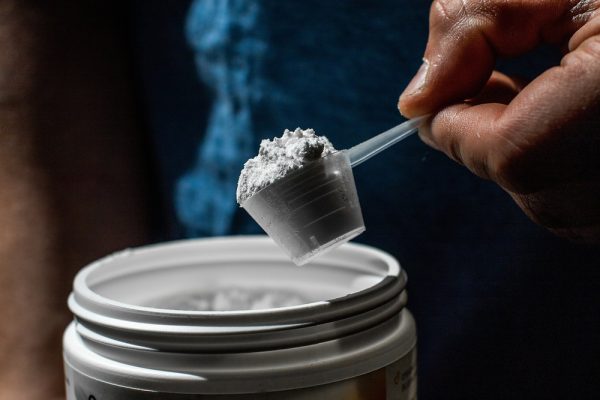
How to Take Creatine Powder
Powder is one of the most widely used supplement formats.
It allows users to measure a serving and combine it with a drink.
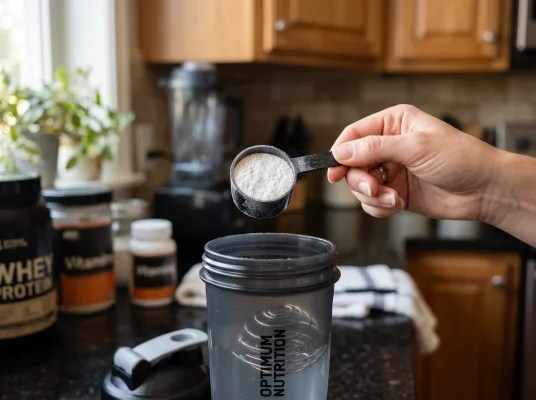
Simple Preparation Method
-
Check the product label for the appropriate serving.
-
Measure the powder accurately.
-
Add it to water or another suitable drink.
-
Stir or shake thoroughly.
-
Consume according to the product directions.
Avoid using an unmeasured household spoon when accurate serving information is important.
Can You Mix Creatine With Protein Powder?
Yes. Creatine is commonly mixed with protein shakes.
Protein and creatine have different roles.
Protein supplies amino acids used for tissue maintenance and growth, while creatine supports the phosphocreatine energy system.
Can You Mix Creatine With Coffee?
Creatine can be mixed with coffee, although research into combined caffeine and creatine supplementation has produced mixed findings.
Some individuals may experience digestive discomfort when combining supplements with caffeinated drinks.
There is no need to use coffee to obtain creatine’s established effects.
Can You Mix Creatine With Juice?
Creatine can be mixed with juice if this fits your dietary preferences.
However, juice is not required for creatine to work.
How to Take Creatine Gummies
Creatine gummies offer an alternative to powder.
They are designed for people who prefer a chewable supplement format.
However, not every gummy product provides the same amount of creatine.
Check the Actual Creatine Content
Some products display a large serving figure on the packaging.
It is important to determine whether this refers to the total gummy weight, a blend of ingredients, or actual creatine.
For example, a gummy containing 1 gram of creatine would provide a different amount from one containing 500 milligrams.
The number of gummies needed to provide a given amount therefore depends on the formulation.
Always follow the manufacturer’s labelled directions rather than automatically increasing the serving.
Do Gummies Work as Well as Powder?
If a gummy provides an equivalent amount of stable, bioavailable creatine, it may be capable of increasing creatine intake.
However, direct comparative evidence remains limited.
Some gummy formulations have raised concerns about ingredient stability and whether the labelled creatine amount is accurately delivered.
For this reason, reliable product testing is particularly important.
Are Creatine Gummies Better for Beginners?
Gummies may be more convenient for people who dislike mixing powders.
However, convenience does not automatically mean greater effectiveness.
The most important considerations are the actual creatine content, product quality, and suitability for the individual.
Creatine Gummies vs Powder: Which Is Better?
| Feature | Creatine powder | Creatine gummies |
|---|---|---|
| Format | Mixable powder | Chewable |
| Convenience | Requires preparation | Portable |
| Taste | Often unflavoured | Usually flavoured |
| Research | Extensive for monohydrate | Limited direct gummy research |
| Added ingredients | Often minimal | May contain sweeteners |
| Serving flexibility | Easy to measure | Depends on gummy content |
| Cost per gram | Often lower | Often higher |
Which Should You Choose?
Creatine monohydrate powder is generally the more established option because it has extensive research supporting its use.
Gummies may appeal to people who prioritise convenience.
Whichever format you consider, review the ingredient list, actual creatine amount, and credible quality-testing information.
How Long Does Creatine Take to Work?
Creatine does not usually produce an immediate noticeable effect after one serving.
The time required to increase muscle stores depends partly on the supplementation approach.
Without Loading
A daily maintenance approach may take approximately three to four weeks to substantially increase muscle creatine stores.
With Loading
A commonly researched loading protocol can increase muscle stores within approximately five to seven days.
However, increases in muscle creatine do not guarantee that everyone will notice the same changes in training performance.
Individual responses depend on baseline stores, training, diet, and other factors.
What Happens When You Start Taking Creatine?
Some people notice an increase in body weight during the early stages of supplementation.
This is often associated with increased water retention within muscle tissue.
It should not automatically be interpreted as fat gain.
Changes in strength and training performance may develop over time when creatine supplementation is combined with suitable exercise.
Does Creatine Make Muscles Bigger?
Creatine can increase muscle water content and may support greater gains in lean mass during resistance training.
However, it is not a substitute for exercise.
Does Creatine Cause Fat Gain?
Creatine does not directly add body fat.
Weight changes associated with supplementation may reflect water retention and, over longer periods, changes in lean mass when combined with training.
Should You Take Creatine Every Day?
People using creatine to maintain elevated muscle stores commonly follow a daily routine.
This includes non-training days.
However, supplementation is optional and should reflect personal goals and health circumstances.
What Happens If You Miss a Day?
Missing one serving does not immediately eliminate the creatine stored in your muscles.
Simply return to your usual routine.
There is generally no need to double the next serving.
Do You Need to Cycle Creatine?
There is no established requirement for healthy adults to cycle on and off creatine monohydrate when following appropriate maintenance protocols.
However, individual medical considerations may affect whether supplementation is suitable.
Is Creatine Safe?
Creatine monohydrate has been studied extensively.
Research generally supports its safety in healthy adults when used at commonly studied amounts.
However, this does not mean every supplement is appropriate for everyone.
Possible Side Effects
Some users may experience:
-
Temporary weight gain from water retention
-
Bloating
-
Nausea
-
Digestive discomfort
-
Diarrhoea, particularly with large single servings
Dividing larger research loading amounts into smaller servings may improve tolerance.
Does Creatine Damage the Kidneys?
Research in healthy adults has generally not shown kidney damage from recommended creatine monohydrate supplementation.
However, people with kidney disease, abnormal kidney function, or relevant medical conditions should seek professional advice before use.
Creatine supplementation can also affect serum creatinine measurements, which may complicate the interpretation of some kidney-function tests.
Inform your healthcare professional if you take creatine.
Does Creatine Cause Hair Loss?
Current evidence does not establish that creatine causes hair loss.
A small earlier study raised questions about hormonal changes, but its findings did not demonstrate actual hair loss.
Further research is needed.
Does Creatine Affect Testosterone?
Creatine is not testosterone or an anabolic steroid.
Research has not consistently demonstrated meaningful increases in testosterone from creatine supplementation.
Can Women Take Creatine?
Yes. Creatine has been studied in women as well as men.
Its potential benefits relate primarily to energy metabolism and high-intensity exercise performance rather than sex-specific effects.
However, individual responses vary, and people who are pregnant or breastfeeding should seek professional advice because safety information for supplementation in these circumstances is insufficient.
Can Older Adults Take Creatine?
Creatine has also been studied in older adults, particularly alongside resistance training.
Some research suggests potential improvements in strength and lean mass.
However, the benefits vary between studies, and supplementation should be considered in the context of overall health, medication use, kidney function, and physical activity.
Common Mistakes When Taking Creatine
Avoiding common misunderstandings can make supplementation more straightforward.
Taking More Than Necessary
Large amounts are not automatically more effective.
Excessive servings may increase the likelihood of digestive discomfort.
Expecting Immediate Results
Creatine works through changes in muscle stores over time.
It is not designed to produce an immediate stimulant effect.
Ignoring Product Labels
Different formulations contain different quantities of creatine.
Always check the amount of actual creatine provided.
Assuming All Forms Are Equal
Creatine monohydrate has the strongest research base.
Claims that newer formulations are automatically superior should be assessed critically.
Neglecting Training and Nutrition
Creatine cannot replace appropriate exercise, sufficient protein, adequate calories, and recovery.
Confusing Water Weight With Fat Gain
Early weight changes can reflect increased muscle water content.
Buying Products Based Only on Marketing
Look for transparent ingredients, accurate labelling, and credible quality information.

How to Choose Quality Creatine Supplements in the UK
When buying creatine, consider the product’s actual composition rather than relying only on promotional claims.
Look for Clear Ingredient Information
Check whether the product contains creatine monohydrate or another form.
Check the Serving Amount
The label should identify how much creatine each serving provides.
Consider Independent Testing
Where available, independent testing can help verify ingredient identity, purity, and labelled amounts.
Review Additional Ingredients
Flavoured powders and gummies may contain sweeteners, colourings, or other ingredients.
Compare Cost per Gram
Price per container does not always reflect value.
Comparing the cost per gram of actual creatine may provide a more meaningful comparison.
Choose a Suitable Format
Powder may be convenient for people who already prepare shakes.
Gummies may suit people who prefer chewable supplements.
The choice should depend on formulation, quality, and personal preference.
Explore Creatine Supplements at Supreme CBD Store UK
At Supreme CBD Store UK, we believe informed supplement choices begin with understanding the ingredients, appropriate serving information, and available scientific research.
Our wellness selection includes creatine products in different formats, including Creatine Monohydrate Powder – 500g and Creatine Gummies – 60 Raspberry, subject to availability.
Whether you prefer mixing powder into a drink or exploring a convenient chewable option, compare the actual creatine content, ingredients, and product directions before purchasing.
A balanced training programme, appropriate nutrition, and adequate recovery remain essential for achieving fitness goals.
Understanding the Best Way to Use Creatine
Learning how to take creatine starts with understanding how the supplement works. Unlike pre-workout stimulants, creatine gradually increases muscle stores, making regular intake more important than precise timing.
Creatine for Beginners
If you are researching how to take creatine for the first time, begin by understanding the difference between maintenance supplementation and optional loading. A daily maintenance approach is commonly used by healthy adults and does not require a loading phase.
Creatine Powder Preparation
Understanding how to take creatine in powder form is straightforward. Measure the serving according to the product label, mix it with water or another suitable drink, and follow the manufacturer’s instructions.
Using Creatine With Your Workout Routine
When deciding how to take creatine around workouts, remember that research has not consistently shown a clear advantage for taking it immediately before or after exercise. Choose whichever time makes daily use easier.
Creatine on Non-Training Days
Another important part of how to take creatine is maintaining consistency on rest days. People following a daily maintenance routine generally continue their usual serving even when they are not exercising.
Creatine Gummies and Daily Servings
For anyone wondering how to take creatine gummies, the most important consideration is the actual creatine content per serving. Different gummy products may contain different quantities, so always check the label.
Common Supplement Mistakes
Understanding how to take creatine also means avoiding unnecessary high doses, expecting immediate results, or overlooking training and nutrition. A consistent approach is generally more useful than complicated supplementation schedules.
Creatine and Hydration
When learning how to take creatine, hydration is another practical consideration. Drink according to your activity level, environment, and individual needs rather than assuming you must consume excessive amounts of water.
Choosing the Right Supplement
Knowing how to take creatine is only one part of making an informed choice. Product quality, accurate serving information, and the form of creatine are also important.
Building a Consistent Routine
The simplest approach to how to take creatine is to choose a suitable product, follow its directions, and maintain a routine that complements your exercise programme and nutritional needs.
Frequently Asked Questions
How to take creatine for beginners?
A commonly studied approach for healthy adults is 3–5 grams of creatine monohydrate daily, without a loading phase. Follow the product directions and seek professional advice if you have relevant medical conditions.
How much creatine should I take per day?
The most widely studied maintenance range is approximately 3–5 grams daily for healthy adults.
Should I take creatine before or after a workout?
Either can be reasonable. Consistency matters more than precise timing.
Can I take creatine without working out?
Creatine can still increase muscle stores, but its established exercise-performance benefits are most relevant when combined with suitable physical activity.
Should I take creatine on rest days?
People following a daily maintenance approach generally continue their normal serving on rest days.
Can I mix creatine with water?
Yes. Creatine monohydrate powder can generally be mixed with water according to the manufacturer’s directions.
Can I mix creatine with protein shakes?
Yes. Creatine is commonly added to protein shakes.
Do I need to load creatine?
No. Loading is optional. A maintenance-only approach can increase muscle stores more gradually.
How long does creatine take to work?
Without loading, increasing muscle stores may take approximately three to four weeks. Loading can increase stores more quickly.
Can creatine cause weight gain?
Yes. Some people experience increased body weight from water retained within muscle tissue.
Is creatine safe for women?
Creatine has been studied in women and men. Suitability depends on individual health circumstances.
Are creatine gummies as effective as powder?
They may provide creatine, but effectiveness depends on actual creatine content, stability, and formulation. Powdered creatine monohydrate has a much stronger direct research base.
Can I take creatine every day?
Daily use is common in research-supported maintenance protocols for healthy adults. Individual circumstances may require professional guidance.
Where can I buy creatine supplements in the UK?
Creatine is available from sports nutrition and wellness retailers. Supreme CBD Store UK offers creatine powder and raspberry creatine gummies within its supplement selection.
Final Thoughts
Understanding how to take creatine does not need to be complicated.
For many healthy adults interested in strength and high-intensity exercise performance, creatine monohydrate is the most extensively researched option.
A consistent daily maintenance approach is commonly used, and loading is not essential.
The best time to take creatine is generally the time that makes regular use easiest.
Whether you choose powder or gummies, focus on the actual creatine amount, product quality, appropriate use, and realistic expectations.
At Supreme CBD Store UK, we encourage customers to make informed choices and use sports nutrition supplements alongside appropriate training, balanced nutrition, and adequate recovery.
Disclaimer: This article provides general educational information and does not replace professional medical advice. Consult a healthcare professional before using creatine if you have kidney disease, take relevant medication, are pregnant or breastfeeding, or have other medical concerns.
how to take creatine, how to take creatine, how to take creatine, how to take creatine, how to take creatine, how to take creatine, how to take creatine, how to take creatine, how to take creatine, how to take creatine, how to take creatine, how to take creatine, how to take creatine.
alb creat ratio,
best time to take creatine for muscle gain,
best way to ingest creatine,
boots creatine,
creatine boots,
creatine dosage,
creatine dosage per day,
best time to have creatine,
best way to take creatine,
creatine benefits for men,
creatine how to use,
creatine kinase 2,
creatine pills,
creatine supplements for women,
free soul creatine,
how much creatine should you take a day,
how much creatine to take a day,
how to take creatine powder,
is creatine good for u,
is creatine ok,
on creatine.
